On New Year’s Day I had one last chance to pick from my friend’s lemon tree. It was great, and I brought home 30+ pounds of amazing fresh lemons.
That’s a lot of lemons! But y’all know about my life-long love affair with this favorite fruit.
The question then became what to do with all the fruit. Especially for someone who opts away from sweet in favor of savory.
My go-to method for preserving this harvest is to puree the lemons whole, and then freeze in large icecube trays. I’ve done several batches that way now. But given the bounty, it was a great opportunity to look for new ideas to keep the goodness going over the longer term.
Most of lemon recipes either opt for sweetening them or just using the juice. I’m not super into sweets, and am certainly not the person to spend my limited patience for the kitchen making tortes or whatever. So I sought out savory options, which did not turn out to be plentiful.
Here are a couple of the recipes I found, and how they worked for me.
preserved lemons
Brine-preserved lemons are a staple condiment of North African, South Asian and Middle Eastern cuisines.
And it’s super simple.
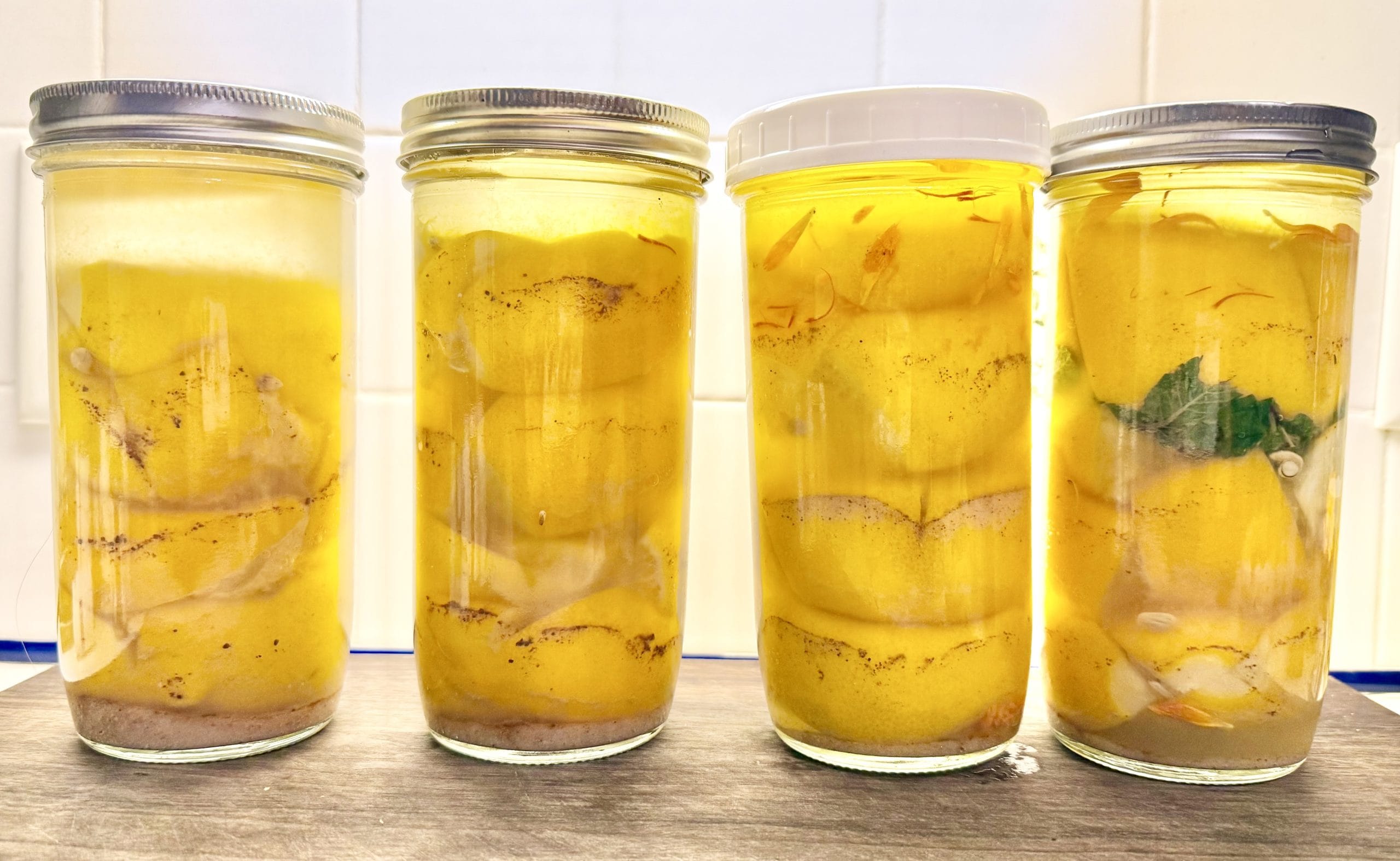
This uses whole lemons, squished into a jar with a salt brine. I looked at several recipes (here, here and here), and then kind of winged it.
I made four versions: one with just lemons and salt, one with added saffron, one with saffron and mint, and one with saffron and fresh turmeric. (You can see them, in order, in the header photo.)
roasted lemons
This recipe gets points for not taking up freezer space. The goal seems to be the lemon version of dried apples, or maybe fruit leather.
I had a little trouble getting all the lemons to the right state of dryness. And because I didn’t cut them completely evenly (and maybe because my oven isn’t the steadiest) they cooked unevenly.
Eventually they went into a bag in the fridge. But tasting them now to complete this write up… wow, they are crispy and bright and kind of wonderful!
You can find recipe with and without sugar. I opted for the latter. One can always add sugar later.
lemon pesto
This was the season’s big winner. So much so that I ate fresh almost as much as I put in the freezer.
I substituted pecorino for paremesan, local hazelnuts for pine nuts, and made one batch with a bunch of parsley for greens. Fresh is definitely better in terms of texture, but both taste great to me. This would be great on pasta (or zoodles) with shrimp or crabmeat. But obviously there are many vegetarian options as well.
Bonus for those with less access to lemons: you only need three lemons for one batch. Here’s the recipe.
using the lemons saved for later
Above are the four ways I’ve come up with for preserving the lemon harvest: frozen puree, brine preserved, roasted and pesto. Once that’s done, though, how do these end up in a meal?
Pesto is the most obvious, and I mentioned some ideas above.
I haven’t figured out what to do with the roasted lemons yet, but will update things here when I do.
Puree is the most flexible. You can add it to salad dressings, make lemonade (add one cube to flat or fizzy water in lieu of an ice cube), savory smoothies, etc. There’s an InstantPot halibut recipe (similar) I’ve liked that calls for lemons, and I may try the puree in there when this year’s fish comes in.
But I just tackled my first recipe using the preserved lemons, and it was a win!
spicy chickpea and preserved lemon soup
When I consider actually making a recipe — rather than just throwing stuff together as I usually do — it has to meet a few criteria.
First, it’s got to be really simple. If it uses multiple anything (cooking vessels, parts of the stove), it’s going to feel like too high a hurdle.
Second, I have to have the most important ingredients easily available. If the recipe wants me to buy it stuff I will never otherwise use, that’s a red flag for wasted groceries and grocery money.
Third, it must sound yummy. Because why bother if it won’t be?
This recipe was the simplest I found in a google search. The least accessible ingredient was the preserved lemon, but I already had that. And I will say that the prospective yumminess pushed me a bit outside my comfort zone, doing a couple more steps than I’d otherwise bother with.
For instance, it actually motivated me to make coconut milk at home. It’s pretty easy, and I’d done it enough in the past to know it’d be easy. And as a bonus, you get home-made coconut milk to play with in other recipes — or to just drink up.
In Vitamix or other powerful blender: add 2 cups of water to 1 cup of shredded coconut, blend like a smoothie and then strain through a cheesecloth.
Beyond that, the recipe is super simple. (Reprinting the recipe here feels like stealing, so please go check it out here.) You sautee some onions and garlic, add three spices (cumin, smoked paprika and red pepper flakes), then broth and chickpeas, and put in the coconut milk and chopped preserved lemons at the end. Chef’s kiss. Really.
I think adding greens improves this dish, as it does with so many other, so shove in as much spinach as you can. Chopped chard would also work. In my next batch I’ll see if adding sorrel tastes as good as it sounds.
What are your thoughts about using lemons in savory recipes? I’d love to hear! If you’ve got something great to share, jump over to the contact page and let me know.
Salúd!
—Dr. Orna
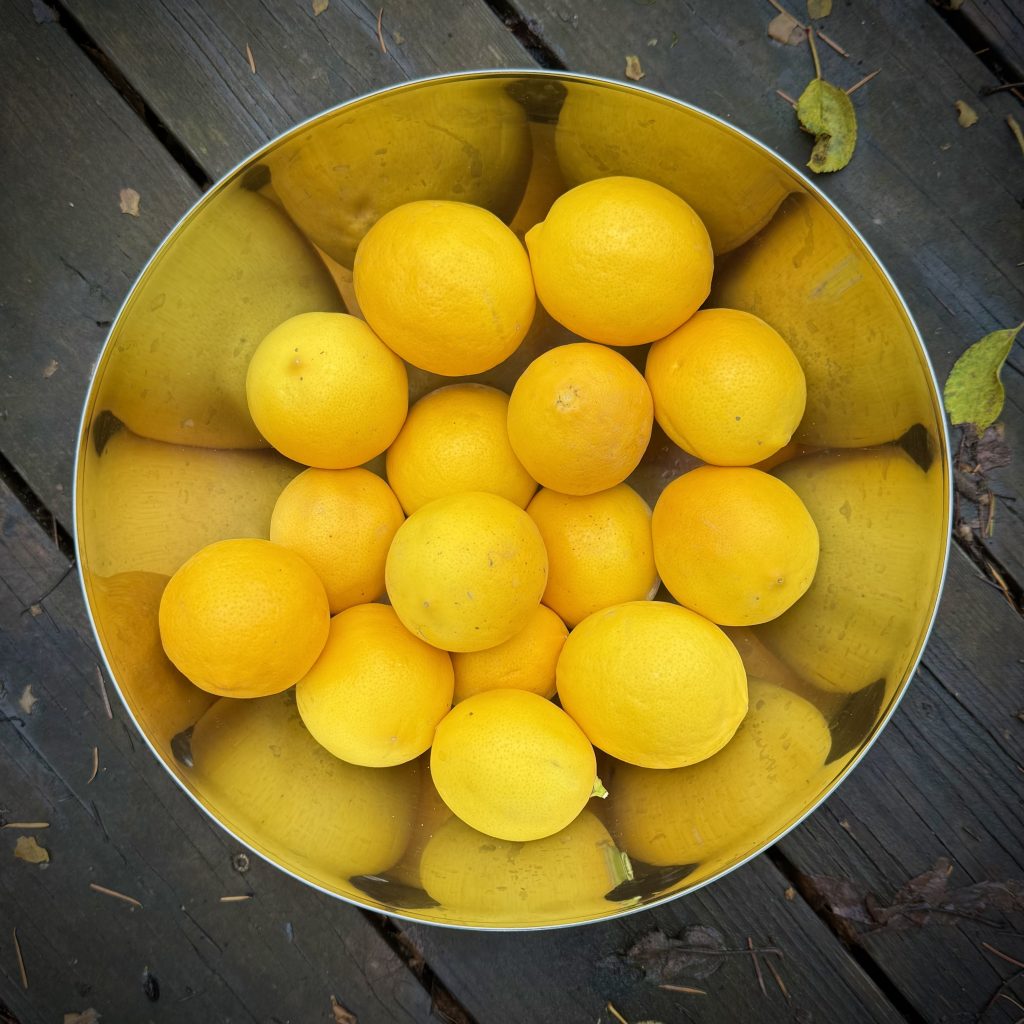
A small portion of the January harvest.
Photos by Dr. Orna.