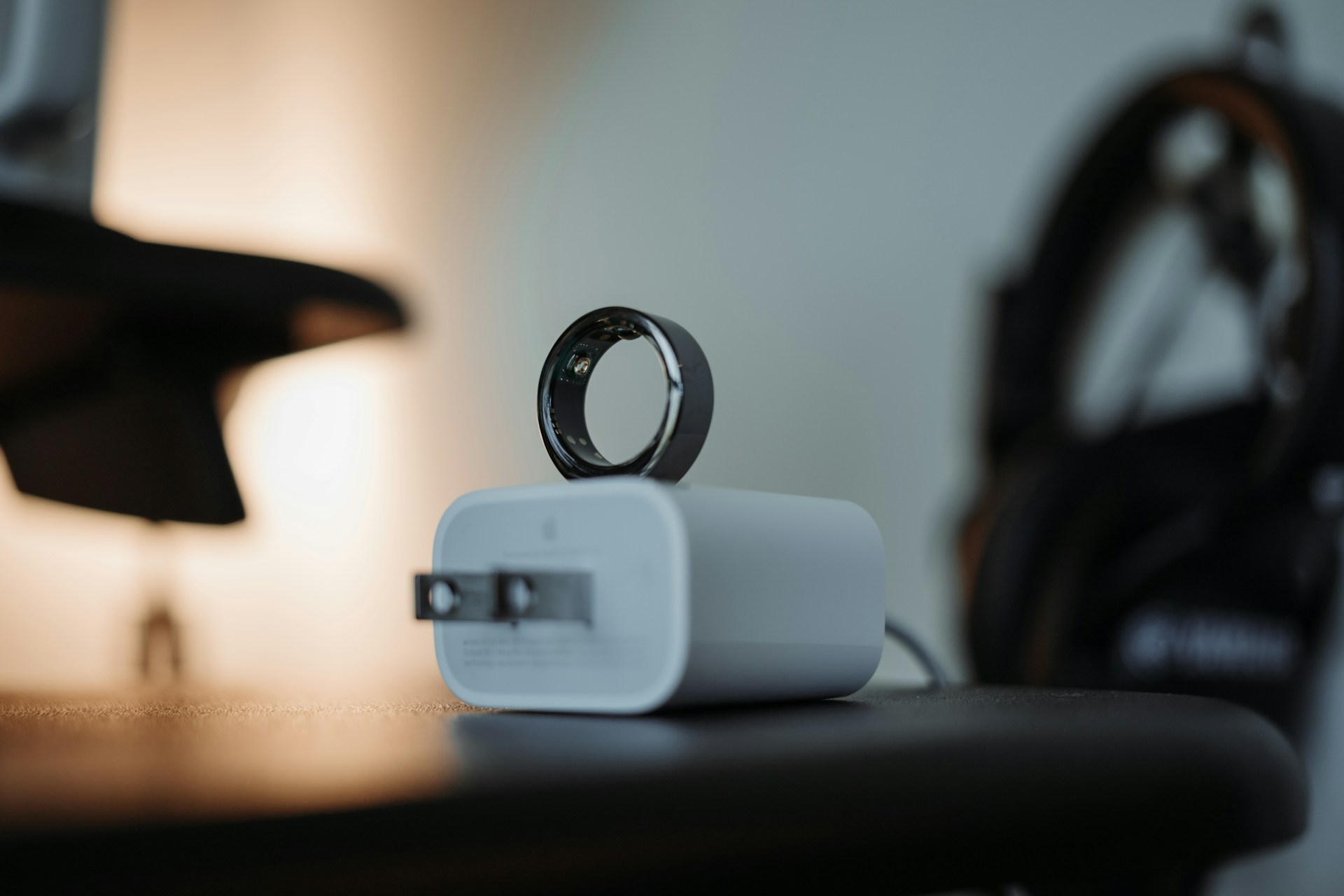
My oura ring battery died, and it’s time to break up.
This was my second ring, replaced (for free, thank you!) after the first battery died. Then this one died. I took it off the charger right before going to the gym, and got a low-battery notification once I got there.
So I was at a crossroads: replace it or retire it.
I’m opting to retire it.
What is an oura ring?
Since 2015, Oura rings have been a popular device for folks wanting to hack their health. The premise is to provide measurable data on variables that are tough to track with just your brain, so you can make lifestyle choices to improve your metrics.
The ring’s main claim to fame is sleep tracking, including total sleep time and sleep stages, although its data are often significantly flawed. Like most consumer devices, it’s pretty good at knowing when you’re asleep or awake — although it can miss naps, or interpret meditation or reading as sleep. It’s significantly less reliable about determining sleep stages, like when you’re dreaming or in deep sleep.
The ring also helps track activity (better when paired with a smart watch), body temperature (used for fertility tracking and early-illness detection,) stress and heart-rate variability. It then uses these data points to recommend actions, such as eating dinner earlier, being extra active on a given day, or taking a day to lie low.
why do people love oura rings?
It’s kind of a nifty device. It’s not bulky like a watch. It’s nice to delegate data collection and (some) analysis to an app. Its aesthetic has become an in-group social signifier among the bio/sleep hacking/maxxing set.

Oura rings have become a social signifier of health maxxing — even if the data aren’t actually helpful.
I know folks who have used this data to successfully identify patterns and make changes to improve their overall sleep, readiness for activity and stress.
Some find the device’s predictions about good days to exercise versus days to go easy tracked with their experience. They found following those recommendations actually helped them over time.
Most people use it specifically to track their sleep, including both timing and sleep stages. And as far as accuracy goes, Oura is one of the better devices out there.
But being “one of the better ones” does not mean the Oura ring is particularly accurate. Some users find the ring gives good information. Others find it’s way off base. In my case, for instance, it was hit or miss about tracking my infrequent naps.
what’s not to love about an oura ring?
The rings have two major limitations:
First, having data doesn’t mean you have accurate data. This matters if you’re making lifestyle changes with an incorrect understanding of what’s actually going on. Playing around with meal timing or alcohol consumption or exercise intensity is perfectly reasonable.
But base your decisions on how you feel in your body, not exclusively on what an imprecise device tells you.
Second, while numbers can be great motivation, they can also lead to hypervigilance and anxiety.
It’s one thing to notice that you haven’t been meeting activity goals, or getting as much deep sleep as you’d like.
But for some folks, especially people with sleep issues or general health anxiety, the data can become a way to increase worry and perfectionism. Instead of the ring being a tool to inform action, the data can instead keep people locked into anxiety and fear. And fear doesn’t make you healthier.
what I liked about my oura ring
I did enjoy the app telling me I’d met my fitness goals. That said, the ring needed me to tell my watch to tell it that I was going for a walk, or at the gym. In the end, the watch I wear every day anyway is a better and sufficient tool.
Most importantly, it caught internal temperature changes indicating an underlying infection. Although it only happened twice, that information was actually important — and something I’d have missed. Losing that functionality is the main thing giving me pause about the breakup,
what I didn’t like about my oura ring
Although the associated app offers general suggestions to improve sleep and overall activity readiness, none of those suggestions worked for me. It would tell me I slept poorly because I ate too late when I hadn’t. It would tell me to exercise when I was exhausted, and tell me to lie low when I actually felt energized.

An epic and energetic day hiking Mt. Hood — when my Oura ring told me to stay home.
In the end, I came to use it to validate how poor my sleep was. After an especially bad night, I’d reach for the app to prove just how bad that night had been. It gave me an excuse to avoid activities — even when those excuses perpetuated chronic insomnia.
I’d also be way of this kind of tracker for anyone with a potentially fertile uterus. Go analog for optimal security — especially in states with stringent abortion restrictions.
And frankly, it sucks to have a million different things you need to charge. Especially when you’re traveling.
do oura rings improve your sleep?
Some people find the rings help them hack their sleep into better shape. And if that’s you, that’s great.
But many of the people in my clinical practice see me for chronic insomnia. And while the ring can feels like offloading the hypervigilance the keeps folks awake, it can also make that hypervigilance worse.
And I often see folks deciding how they feel based on what their device data told them to. Sometimes that’s a good fit. Sometimes it’s completely backwards.
Generally speaking, the best sleep is what you get when you’re least worried about improving it. Devices add pressure and push perfectionism.
what I miss about my oura ring
After a couple of days, I do miss the feeling of the ring on my finger. It’s been there for a few years, so it just kind of feels weird. Luckily, I have other rings that have been waiting for an opportunity to rejoin the party.
I do miss checking and seeing that I hit my movement goal, although this is something my watch and phone can take over.
I do miss the affirmations of a good sleep night.
And the backstop of temperature alerts really was helpful.
What I won’t miss is the monthly subscription charge — when I screw up my courage to finally cancel it. Any minute now.
Update: It took 3 months to finally cut the cord. But my sleep improved as soon as I left the ring to die in peace.
more on sleep
- Got insomnia? Try CBT-I first.
- How to wake up in the morning
- Sleep cool is self defense
- Is melatonin safe? Is it effective?
- Herbs for sleep + mental health in turbulent times (podcast)
- Sleep better tonight with this simple hack
- Sleep matters
- Book an appointment for cognitive-behavioral therapy for insomnia
Header photo by Yucel M on Unsplash.
Sandboard dude bro photo by Paul Faure on Unsplash.